
How AI Is Changing Art Logistics and Installation Planning
The art world has always moved carefully literally and figuratively. Every crate lifted, every painting hung, every condition report filed is the result of years of specialized knowledge, human judgment, and meticulous attention to detail. But something is shifting. Artificial intelligence is quietly entering the back rooms of galleries, the loading docks of art fairs, and the planning spreadsheets of fine art logistics companies and it’s changing the way the industry operates.
This isn’t about robots hanging paintings. It’s about smarter planning, fewer surprises, and better care for the works that matter most.
The Art World Is Finally Embracing AI Behind the Scenes
According to Artsy’s 2026 AI Survey, the majority of galleries using AI are doing so operationally, not creatively. Nearly one in five galleries is already using AI for installation renderings or virtual exhibition design, while a growing number are integrating it into collection management, communications, and logistics planning. The message is clear: AI is becoming a back office tool, not a front of house conversation.
For fine art handlers, installers, and logistics coordinators, this shift represents both an opportunity and a challenge. The opportunity is obvious better tools, smarter workflows, fewer errors. The challenge is knowing where AI genuinely helps and where human expertise remains irreplaceable.
Where AI Is Making a Real Difference in Art Logistics
- Smarter Route and Shipping Planning
One of the most immediate applications of AI in fine art logistics is transportation optimization. Platforms like Convelio have already introduced AI powered systems that calculate optimal shipping routes by evaluating fragility, dimensions, climate sensitivity, and cost generating quotes and logistics plans in minutes rather than days. For galleries preparing for multiple art fairs across continents, this kind of tool dramatically reduces planning time and human error.
AI can also flag potential risks in transit routes weather disruptions, customs delays, or seasonal bottlenecks before they become costly problems. - Condition Reporting and Damage Detection
Condition reporting is one of the most time consuming and detail intensive parts of fine art handling. AI powered image recognition tools are beginning to assist handlers in identifying surface damage, previous restorations, and subtle changes in a work’s condition with a level of precision that surpasses the human eye in certain contexts.
Companies like Artclear are using blockchain combined with AI driven scanning technology to create permanent, tamper proof provenance and condition records giving galleries, collectors, and institutions a new level of confidence in the integrity of each work. - Installation Planning and Virtual Exhibition Design
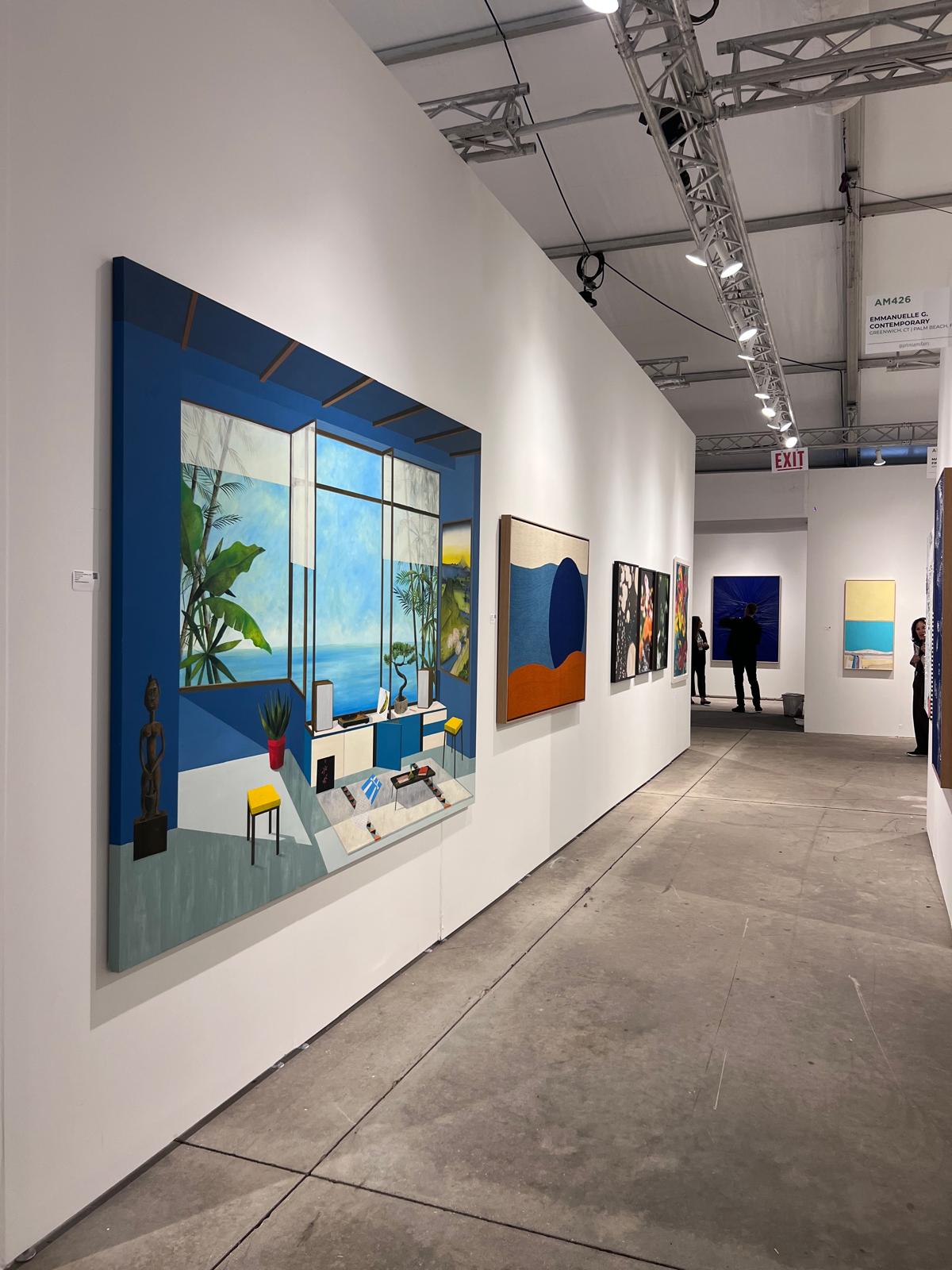
Before a single crate is opened, AI tools can now generate detailed installation renderings that simulate how works will look in a specific booth or gallery space. Galleries can experiment with layouts, lighting, and spacing virtually reducing costly last-minute changes on installation day. This is particularly valuable for complex art fair booth setups, where every square meter counts and setup windows are tight. - Collection and Inventory Management
For large galleries and private collections, tracking hundreds or thousands of works across multiple locations studios, warehouses, fairs, exhibitions has always been a logistical challenge. AI-integrated inventory management systems now allow real time tracking, automated condition updates, and predictive alerts for maintenance or climate control issues. Convelio’s 2025 launch of its AI powered Inventory Management Software is one example of how the line between shipping and collection care is beginning to blur.
What AI Cannot Replace
Human judgment in fragile situations. No algorithm can replicate the instinct of an experienced art handler who senses that a stretcher bar is under unusual tension, or recognizes that a sculpture’s center of gravity is not where it appears to be. Fine art installation is a physical, tactile practice built on years of experience with specific materials, formats, and artists.
Relationship and context. Art logistics is a people business. Understanding a gallery’s priorities, an artist’s preferences, or a collector’s anxieties requires emotional intelligence and trust things AI cannot build.
Unpredictable environments. Art fairs are chaotic. Loading docks get backed up, floors are uneven, and last-minute changes are the rule, not the exception. Experienced installers adapt in real time. AI plans for ideal conditions.
The Future: Augmented, Not Automated
The most forward-thinking fine art services companies are not asking whether to use AI they’re asking how to use it wisely. The answer, for now, is augmentation: using AI to handle the planning, documentation, and data heavy tasks so that human specialists can focus on what they do best the careful, skilled, irreplaceable work of moving and installing art.
At Arreaza Fine Art Services, we believe technology should make our work smarter without making it less human. As AI tools continue to evolve, we’re committed to integrating the ones that genuinely serve our clients galleries, collectors, art fairs, and institutions while maintaining the hands on expertise that no software can replicate.
The future of fine art logistics is not a robot with white gloves. It’s a skilled team equipped with better tools.
Tags: fine art installation, art logistics, AI in the art world, art fair booth setup, fine art handling, art transportation, collection management, art installation planning, white glove art services, fine art packing
Sources
- Logistics Viewpoints — AI in Logistics: What Actually Worked in 2025 and What Will Scale in 2026 https://logisticsviewpoints.com/2025/12/22/ai-in-logistics-what-actually-worked-in-2025-and-what-will-scale-in-2026/
- Artsy Editorial — The Artsy AI Survey 2026: What Galleries Really Think About AI in the Art World https://www.artsy.net/article/artsy-editorial-artsy-ai-survey-2026-galleries-ai-art
- MyArtBroker — Art Tech & AI Platforms Shaking Up The Secondary Art Market https://www.myartbroker.com/art-and-tech/articles/art-tech-ai-platforms-shaking-up-secondary-art-market